
We sometimes wonder why communities have become so accustomed to thinking of trees as expendable.
We sometimes wonder why communities have become so accustomed to thinking of trees as expendable.
A tree shades the house, but it drops leaves in the fall. Its branches reach over a fence or driveway. Its roots disturb the lawn. It threatens power lines. So we cut it down. When land is developed, it is often easier and less expensive to clear the site first and landscape it later. Mature trees that may have taken a century to grow can disappear in an afternoon.
Certainly, there are sometimes good reasons to remove trees. Some become diseased or dangerous. Homes, roads and other development are parts of a community’s growth. Forests themselves are constantly changing. But perhaps we have become too quick to see a mature 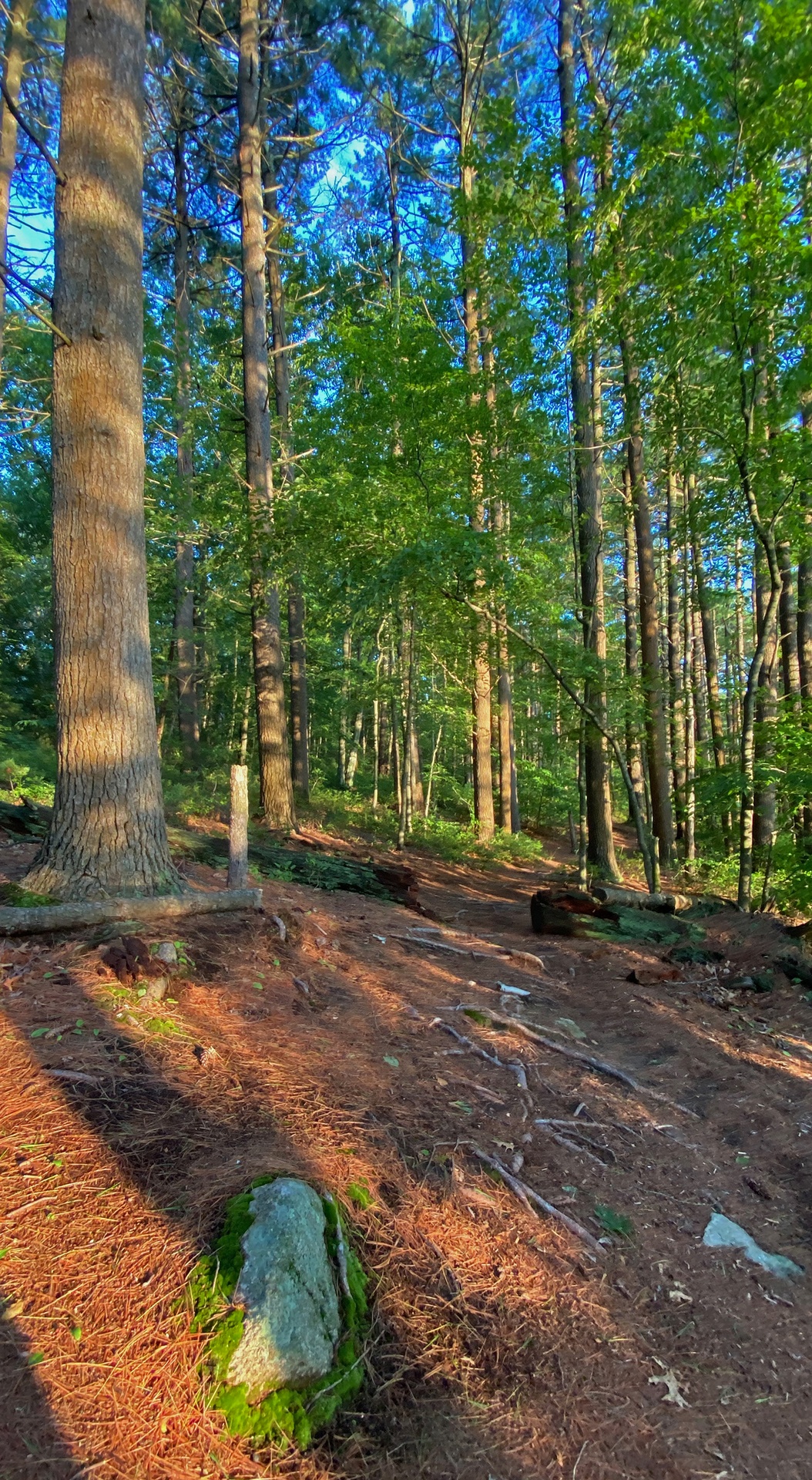 tree primarily as an obstacle or a potential liability, rather than as something of considerable value.
A mature tree is much more than its trunk and branches. It captures carbon, filters pollutants from the air, moderates temperature, slows and absorbs stormwater, protects soil, and provides food and shelter for an extraordinary variety of living things. Near a stream, lake or Great Pond such as Whitehall Reservoir, those functions take on additional importance by helping protect the surrounding watershed and water quality. A forest magnifies those benefits by creating an interconnected community of trees, understory plants, fungi, insects, birds and animals.
And forests provide something not so easily measured.
Most of us recognize the feeling of entering mature woods. The temperature changes. Sounds soften. Light filters through the canopy. We may find ourselves slowing down and feeling more relaxed. There is increasing evidence for what many cultures have understood intuitively for generations: spending time among trees and in natural environments can reduce stress and contribute to our physical and emotional well-being.
Perhaps the question, then, shouldn't always be “Is there a reason to keep this tree?”
Perhaps it should sometimes be “Is there a good reason to take it down?”
At Laurel Ridge, that small change in perspective informs much of what we do. We preserve mature trees wherever we can, allow portions of the forest to remain naturally untidy, and are returning native trees to areas disturbed in the past. Atlantic white cedar, tupelo, red or swamp maple, eastern hemlock and other native species are being planted not for what Laurel Ridge will look like next year, but for what this landscape might become many decades from now.
We won't be here to see those trees reach maturity. That's rather the point.
Conservation asks us to place value on something even when much of its benefit will belong to those who come after us.